In the vibrant landscape of Swedish football, few clubs embody the fluctuating fortunes and enduring spirit quite like GIF Sundsvall. Fondly known as "Giffarna" by their loyal supporters, this club from Sundsvall, located in the heart of northern Sweden, has carved out a unique identity through its dynamic journey between the country's top two divisions: the Allsvenskan and Superettan. From exhilarating promotions to heart-wrenching relegations, Giffarna's narrative is a compelling saga of resilience, passion, and an unwavering commitment to the beautiful game.
Founded in 1903, GIF Sundsvall wears its blue and white colours with pride, representing not just a city but an entire region. Their story isn't merely about wins and losses; it's about the relentless pursuit of top-flight football, the development of local talent, and the deep connection forged with a dedicated fanbase through thick and thin. This article delves into the club's rich history, its significant moments, key players, and what makes Giffarna a truly special institution in Swedish sports.
The Rollercoaster Ride: A History of Promotion and Relegation
The defining characteristic of GIF Sundsvall's existence has undoubtedly been its "yo-yo" status. Over the decades, Giffarna have become synonymous with the thrilling, yet often challenging, cycle of promotion to the Allsvenskan, Sweden's premier football league, followed by periods in the Superettan, the highly competitive second tier. This journey, marked by 19 seasons in the Allsvenskan and 12 in the Superettan, speaks volumes about the club's ambition and fighting spirit.
Giffarna's first taste of the Allsvenskan came in 1965, a momentous occasion for the club and its fans. However, their stay was brief, with relegation following after just one season. This early pattern would foreshadow much of their future. They returned to the top flight in 1986, enjoying a more sustained period of four seasons, which helped solidify their presence on the national stage. The early 2000s marked arguably their most successful spell, achieving impressive 7th-place finishes in both 2001 and 2002 – a testament to a strong squad and clear strategic vision.
The subsequent years saw a rapid succession of ups and downs. Relegated in 2004, Giffarna fought their way back in 2008, only to be relegated again in 2009. A similar pattern emerged with promotion in 2011 and relegation in 2012. Each bounce back required immense effort, strategic rebuilding, and a surge of determination from players, staff, and supporters alike. After three seasons in the Superettan, they earned promotion again in 2014, maintaining their Allsvenskan status until 2019. Most recently, GIF Sundsvall celebrated promotion in 2021 but faced the difficult reality of relegation in 2022, finding themselves once again in the Superettan. This constant fluctuation, while challenging, has forged a resilient club identity and created a unique bond with a fanbase accustomed to both the euphoria of promotion and the resolve required after relegation.
Giffarna's Home and Heart: The NP3 Arena and Fan Culture
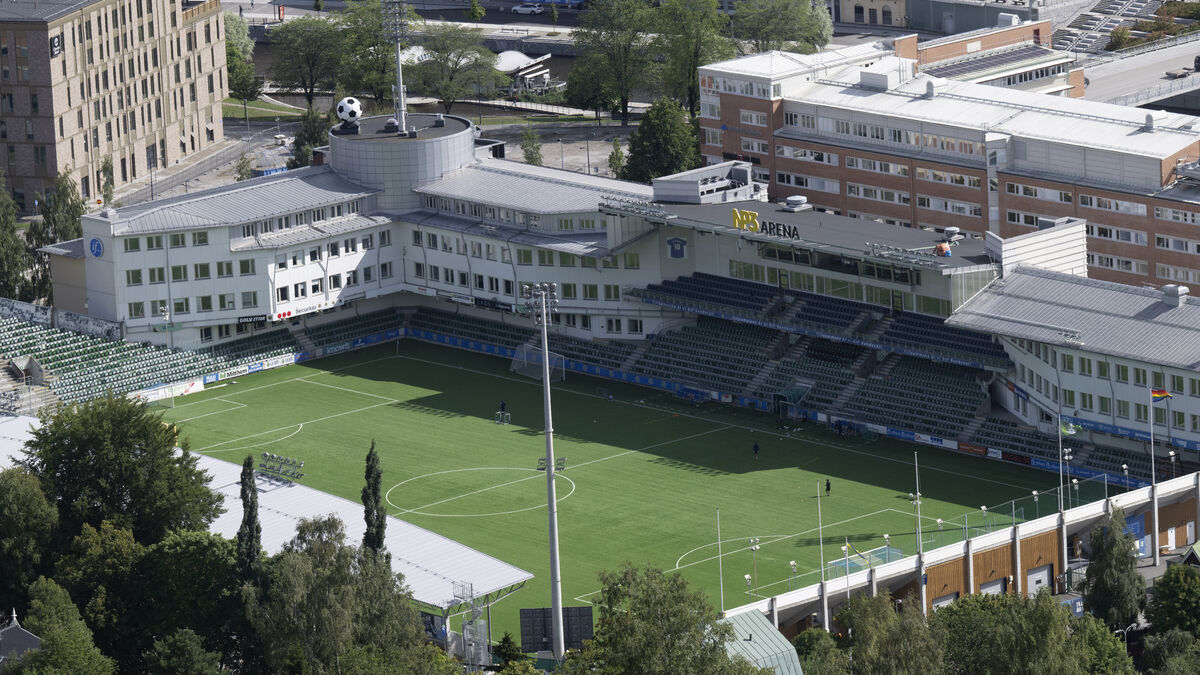
At the core of GIF Sundsvall's identity is its home, the state-of-the-art NP3 Arena. Opened in 2019, this modern stadium replaced the historic Idrottsparken, providing Giffarna with a cutting-edge facility befitting a club with high ambitions. With a capacity of 8,000 spectators, a natural grass pitch, and under-soil heating, the NP3 Arena offers an exceptional matchday experience for fans and players alike. It has also proudly hosted international matches, further cementing its status as a premier sporting venue in Sweden.
The atmosphere at a Giffarna home game is electric, fuelled by a loyal and passionate fanbase. Their blue and white colours are proudly displayed, creating a vibrant spectacle. This fervent support is particularly evident during the intense "Norrlandsderbyt," the highly anticipated regional rivalry against Umeå FC. These derbies are more than just football matches; they are battles for regional pride, bringing out the best in competition and fan engagement. The club's commitment extends beyond the pitch, fostering a strong academy system dedicated to developing young talent, ensuring a sustainable future and a pipeline of homegrown players who understand the club's values.
Key Players and Recent Performance: A Glimpse into the Squad
To understand the club's journey, it's insightful to look at specific moments in their recent history. Take, for instance, a snapshot from the 2021 Superettan season. On Saturday, May 22, 2021, GIF Sundsvall showcased their prowess with a convincing 2-0 victory over Orgryte, a crucial win that demonstrated their ambition to climb the league standings. This match, ending 0-0 at half-time before Giffarna asserted their dominance, was a testament to their strategic play and ability to convert opportunities.
At that point in the season, after 26 matches, Giffarna occupied a respectable 7th position in the Superettan table, accumulating 38 points from 11 wins, 5 draws, and 10 losses. Their form leading up to this period had been positive, reflecting a team hitting its stride. Victories against Vasalund (3-2), Osters IF (2-0 away), and Norrby (2-0) underlined their attacking threat and defensive solidity. While a 1-2 loss to Varnamo and draws against Akropolis (1-1) and Helsingborg (2-2) showed areas for improvement, the overall trend was upward, indicating a push towards promotion contention. Their head-to-head record against Orgryte also showed a dynamic rivalry, having lost 1-4 in October 2020 but securing a strong 2-0 away win in July 2020 before their May 2021 encounter.
The driving force behind Giffarna's offensive efforts during this period was undoubtedly the prolific L. Hallenius, who led the team with an impressive 15 goals. His clinical finishing made him a constant threat to opposition defences. Not far behind was P. Engblom, a vital cog in the team's attack with 9 goals and a remarkable 8 assists, demonstrating his ability to both score and create opportunities. E. Andersson also contributed significantly with 5 goals and 5 assists, further highlighting the depth of creative talent within the squad. Other key contributors included J. Bengtsson (4 goals), P. Pichkah (2 goals, 3 assists), and D. Olsson (1 goal, 3 assists). While disciplinary records, notably D. Stensson's 6 yellow/red cards and L. Hallenius's 5, indicated an aggressive playing style, it also underscored the intensity and commitment the players brought to every game. For a detailed breakdown of the team's performance and individual statistics, you can refer to Giffarna's Superettan Standings & Top Scorers: Hallenius Leads.
Legends and Legacy: Shaping the Future of Giffarna
Beyond the immediate league standings and individual statistics, GIF Sundsvall boasts a proud legacy of developing and nurturing exceptional football talent. Many players who have honed their skills at Giffarna have gone on to achieve significant success on larger stages, bringing recognition to the club and inspiring future generations. Notable alumni include Mikael Lustig, who became a stalwart defender for Celtic and Arsenal, and a key figure for the Swedish national team. Astrit Ajdarevic made his mark with clubs like Standard Liege and AEK Athens, showcasing the technical quality nurtured in Sundsvall. Perhaps most prominently, Emil Forsberg, currently a star midfielder for RB Leipzig and a creative force for the Sweden national team, began his professional journey with Giffarna, embodying the club's potential for producing world-class talent.
The club has also benefited from the guidance of successful coaches, such as Rikard Norling, who later managed prestigious clubs like AIK and Malmö FF, and Roger Franzén, who led Giffarna to promotion in 2011. These figures have contributed to a coaching philosophy that emphasizes both tactical development and player growth. This commitment to development extends to a strong academy system, which is crucial for a club that frequently navigates the financial and sporting challenges of moving between divisions. By investing in youth, Giffarna ensures a sustainable future, fostering local talent and instilling a deep understanding of the club's unique culture and ambitions. Furthermore, the presence of a women's team competing in Division 1 Norra underlines the club's broader commitment to football development across all levels.
GIF Sundsvall's journey is a microcosm of the passion and unpredictability that define football. Their constant oscillation between the Allsvenskan and Superettan is not merely a record of results but a testament to a club that refuses to give up. With a modern home at the NP3 Arena, a dedicated fanbase, a rich history of developing talent, and an unwavering spirit, Giffarna remains a cherished institution in Swedish football, continually striving for stability at the top flight while embracing the challenges and excitement of the journey.